Shoppin: Finding your way through Mumbai's street markets.
A digital companion for exploring Mumbai's street markets. It helps people discover shops, navigate crowded lanes, find what they're looking for and keep track of places.
Interact with the final version of the prototype here.
The prototype is loading.
Timeframe
July 2025 (4 weeks)
Done at
NMIMS School of Design
The Team
- Kaustubh Korde
- Aaron Carvalho
- Deshna Deora
- Fariya Hasan
Context
Mumbai's street markets don't work like conventional shopping spaces.
They are made up of hundreds of independent stalls and shops spread across busy, constantly changing streets. Shops may not have clear names or addresses, while shoppers often rely on familiar places, landmarks and visual cues to understand where they are.
Unlike a mall or an online marketplace, there isn't always a fixed structure telling you what is where. The experience is built around exploration, recommendations, bargaining and discovering something along the way.
This made street markets an interesting space to explore: could digital tools support the experience without turning it into another online shopping platform?
My role
- Contributed to the initial concept and product direction.
- Worked on UX/UI ideation with Aaron.
- Designed the Login, Home and Maps experiences.
- Fully prototyped the screens I designed and co-handled the overall interactive prototype with Aaron.
- Participated in the field research and development of the overall experience, IA and user flows.
- Contributed to testing and refining the experience through the final iterations.
The market was easy to find.
The shops weren't.
Street markets are easy to reach, but difficult to navigate once you're inside.
Shops are often spread across crowded lanes without clear names, addresses or consistent signage, making it difficult to know where a particular shop is or how to get back to it. Shoppers instead rely on landmarks, familiar stores and visual cues to orient themselves.
This becomes especially difficult when you're looking for something specific. You may know the market, or even know that a particular shop exists, but still have no clear way to locate it among hundreds of stalls and changing storefronts.
If digital tools can get you to the market, why do they stop helping once you enter it?
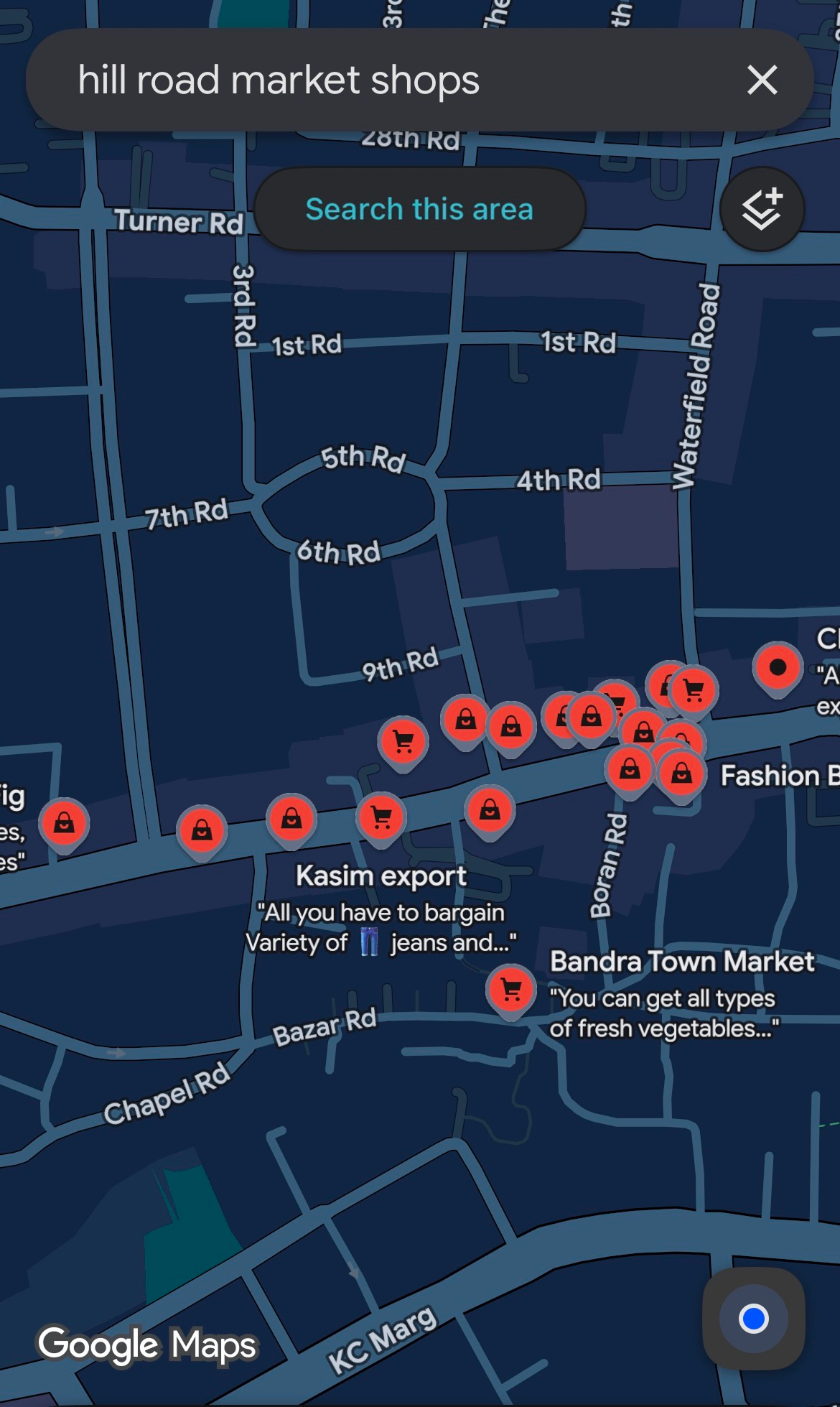

*hover over the images to see the problem
Digging deeper
WHAT WE SAW ON THE GROUND
At Hill Road, navigation wasn't really about addresses. People moved through the market using landmarks, familiar shops and whatever visual cues they could recognise along the way.
Most stalls didn't have clear nameplates, making individual shops difficult to identify and revisit.
LANDMARKS
People used cafés, shops and other familiar places as reference points.
VISUAL CUES
Shoppers relied on what they could see around them to understand where they were.
UNSTRUCTURED LAYOUT
Crowded lanes and changing vendor setups made conventional navigation difficult.
The problem wasn't getting to the market.
It was knowing what to do once you got there.
The digital and physical parts of the experience were disconnected. Digital tools helped people decide where to go, while the market itself determined how they found their way once they arrived.
Shoppin became an opportunity to connect these two parts without taking away what makes street shopping different.
How Might We
bring the essence of street shopping into a digital tool that helps people explore markets with ease, confidence and minimal hassle?
We didn't want to build another map.
We wanted to build a guide to the market.
A conventional map could tell someone where a shop is. But street markets aren't experienced through addresses alone.
We wanted Shoppin to work more like the way people already experience these markets by what they're looking for, what's around them, people they know and recommendations.
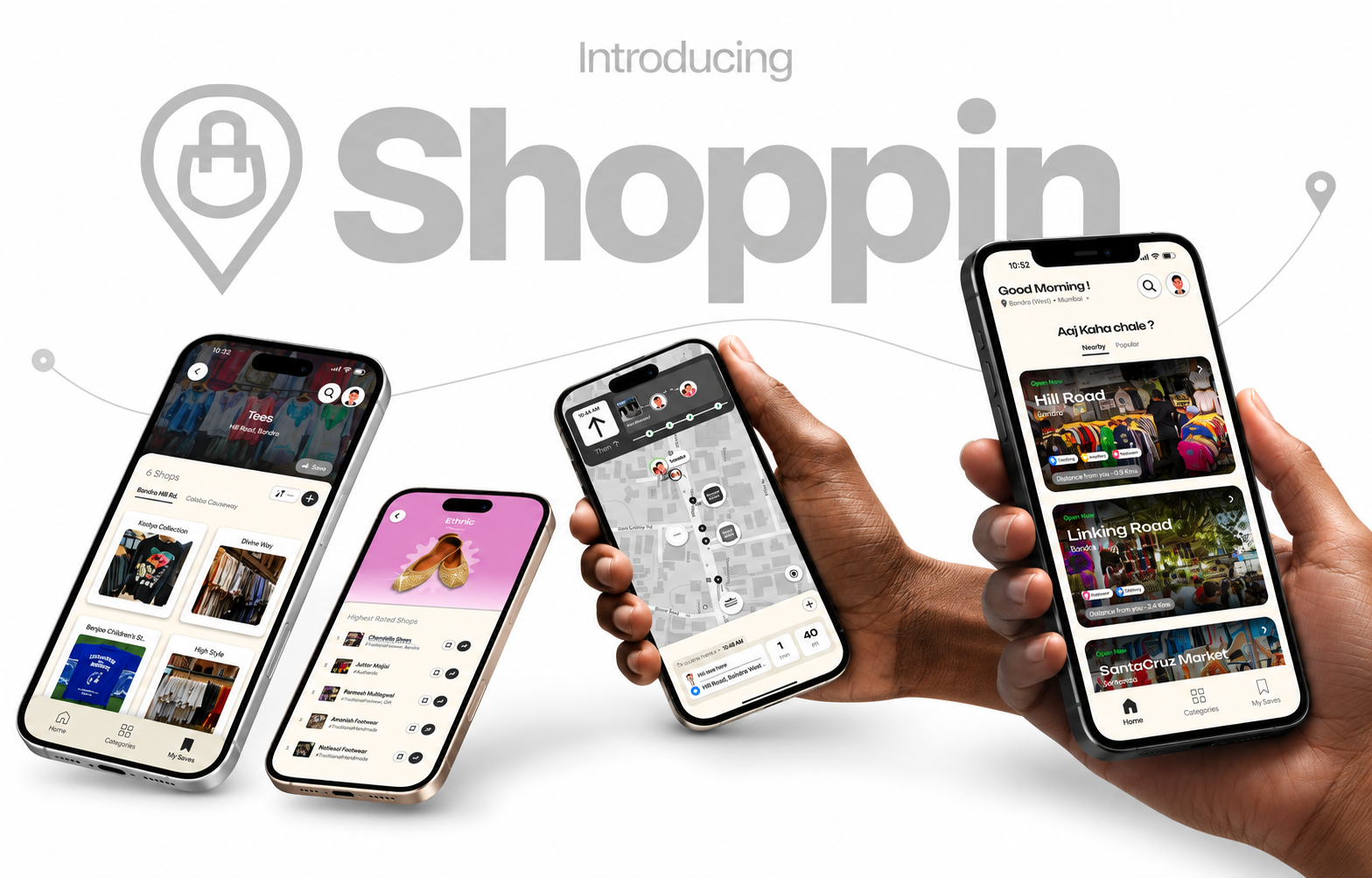
4 things make up the Shoppin experience.
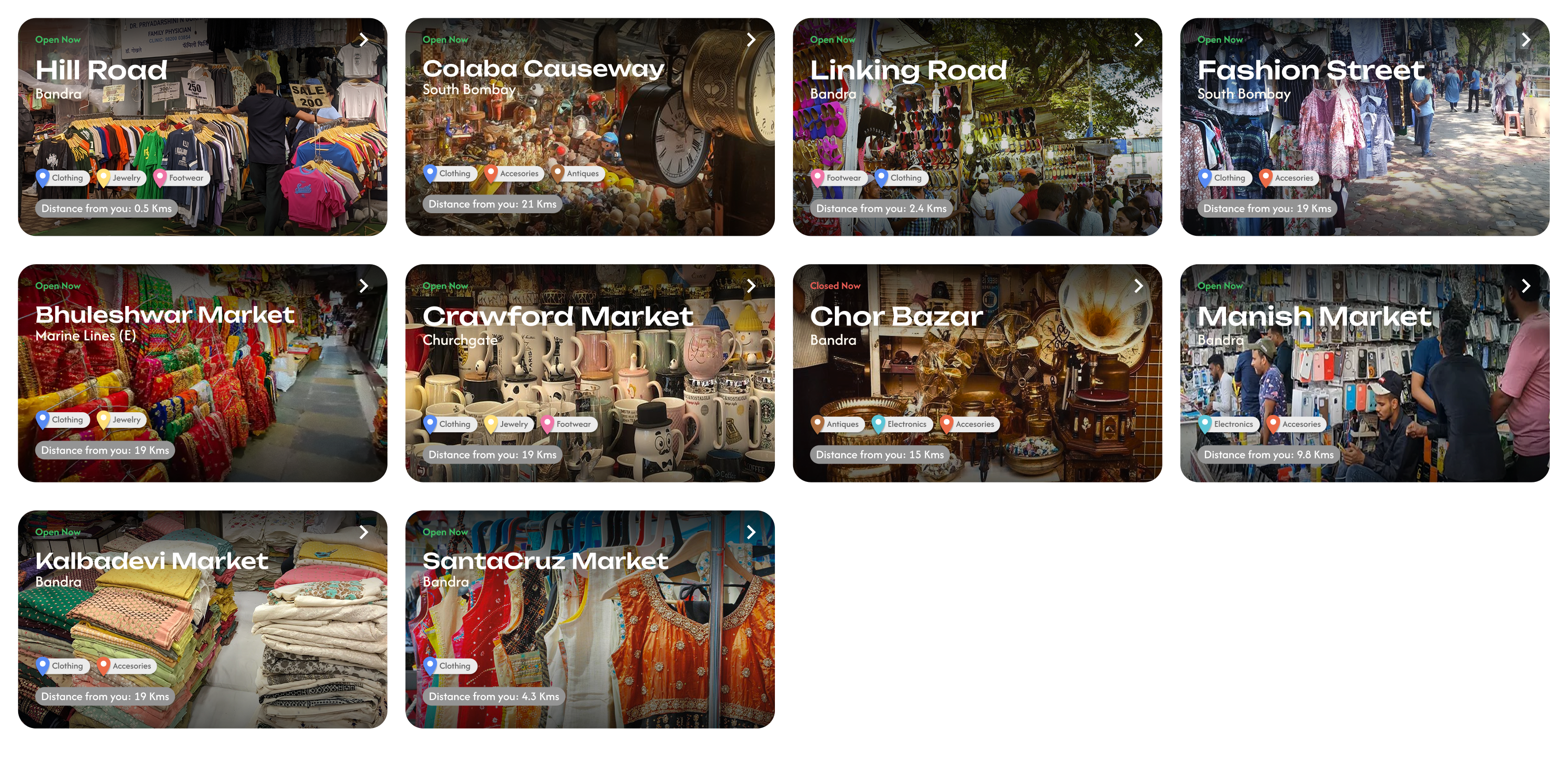
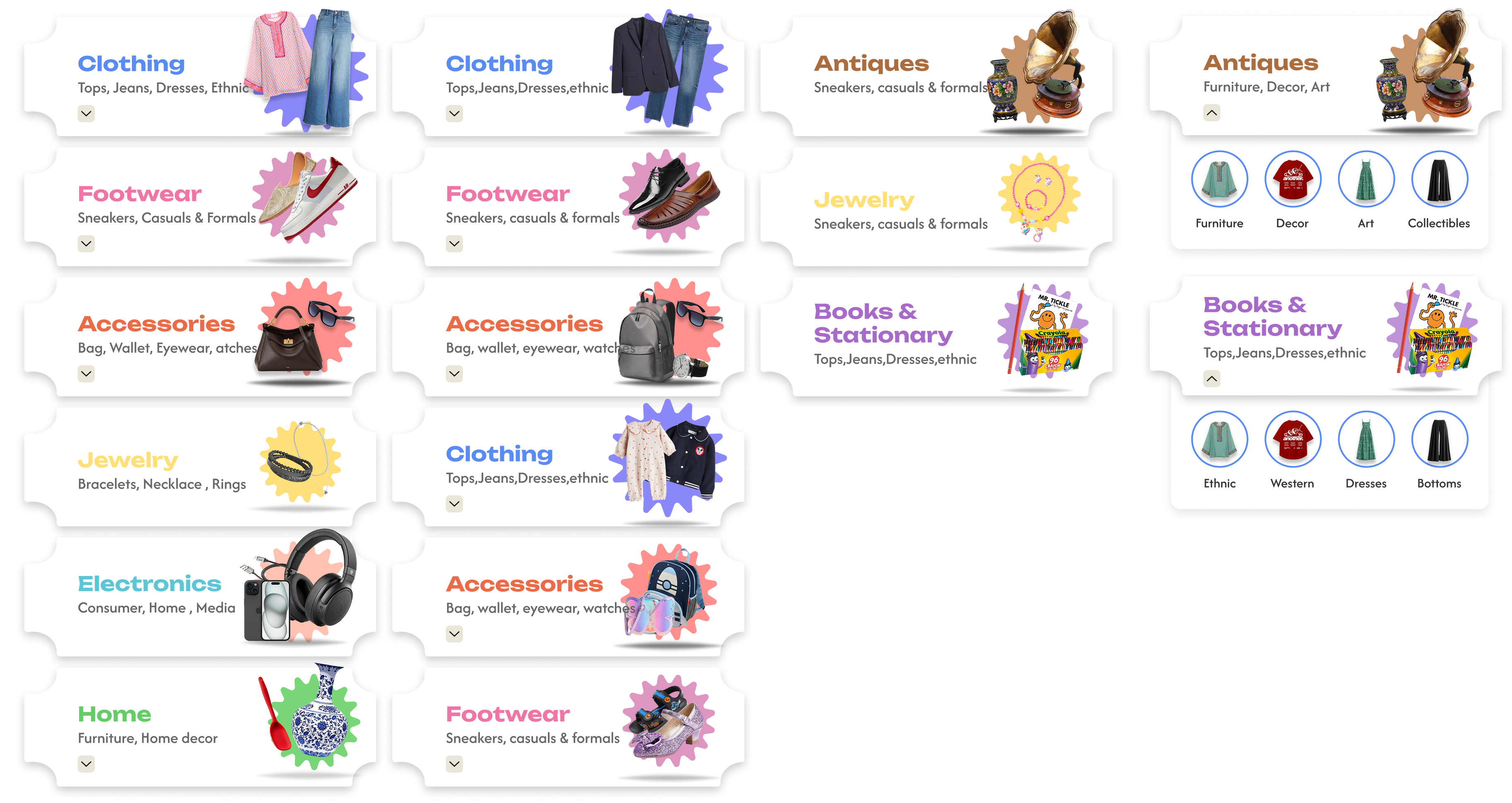
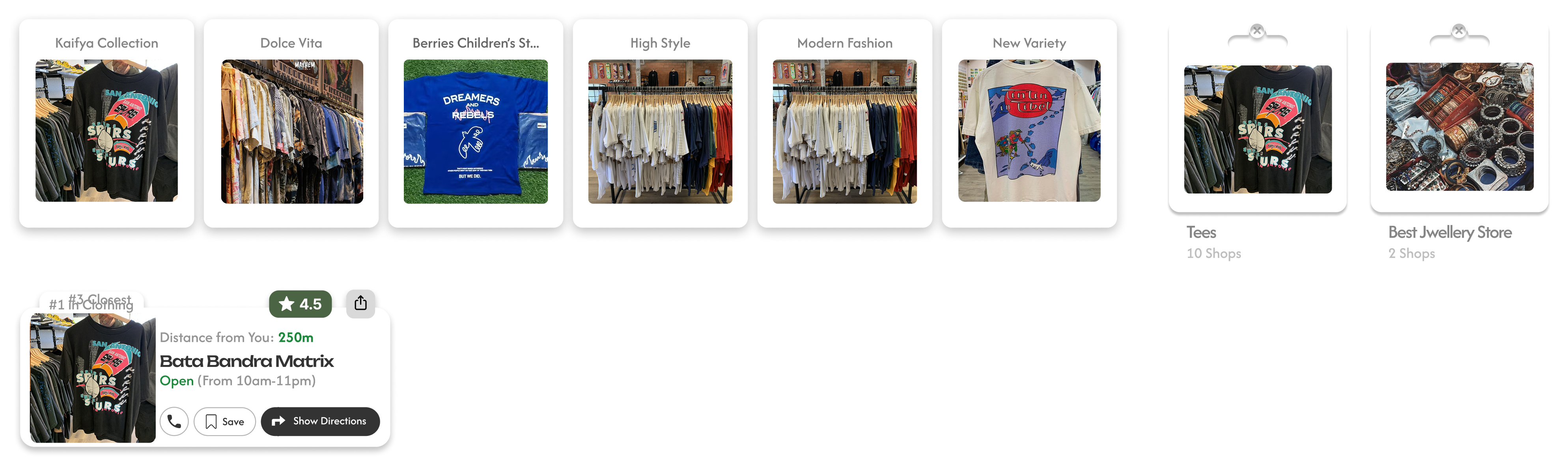
Find markets, categories and popular shops before and during your visit.
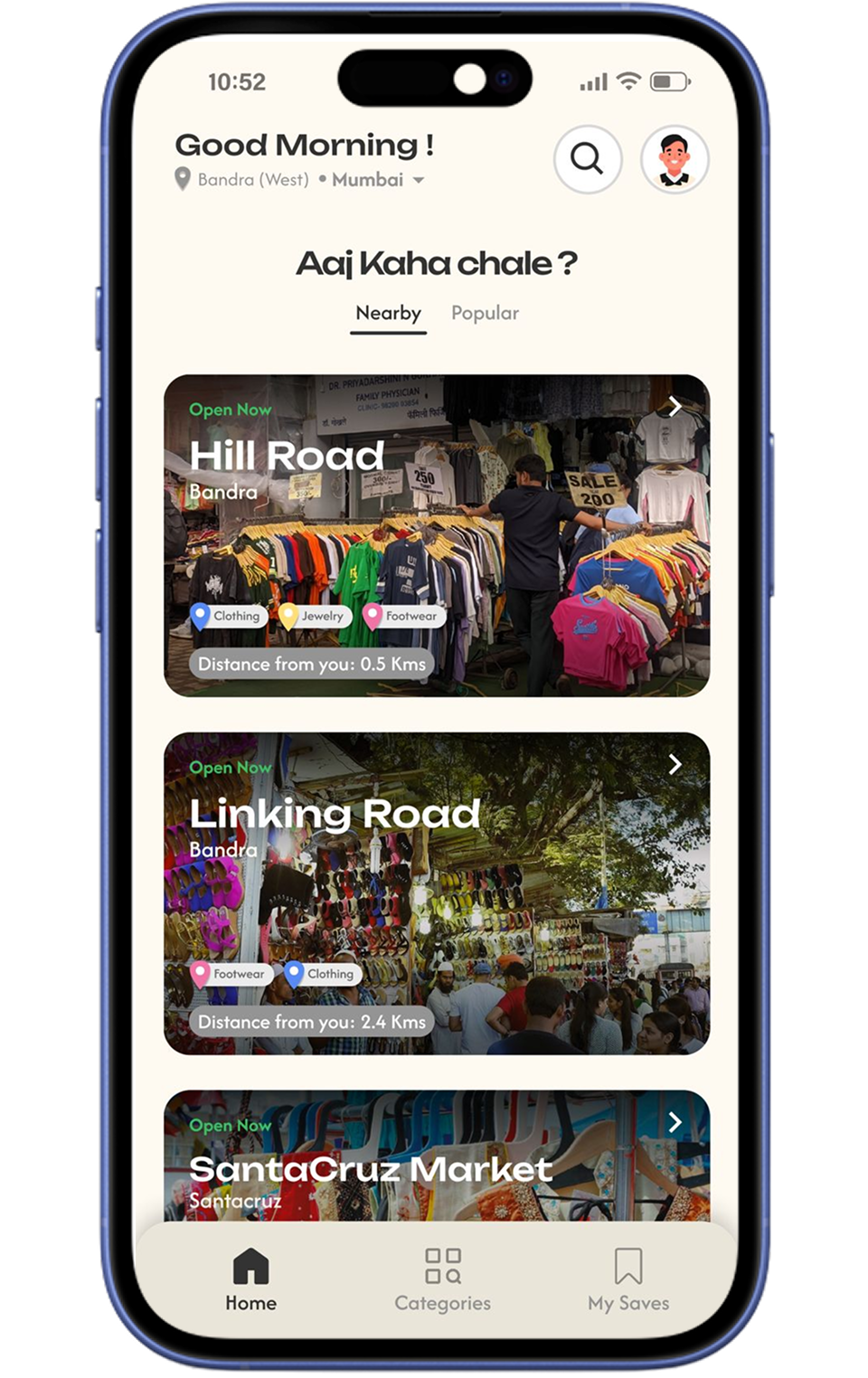
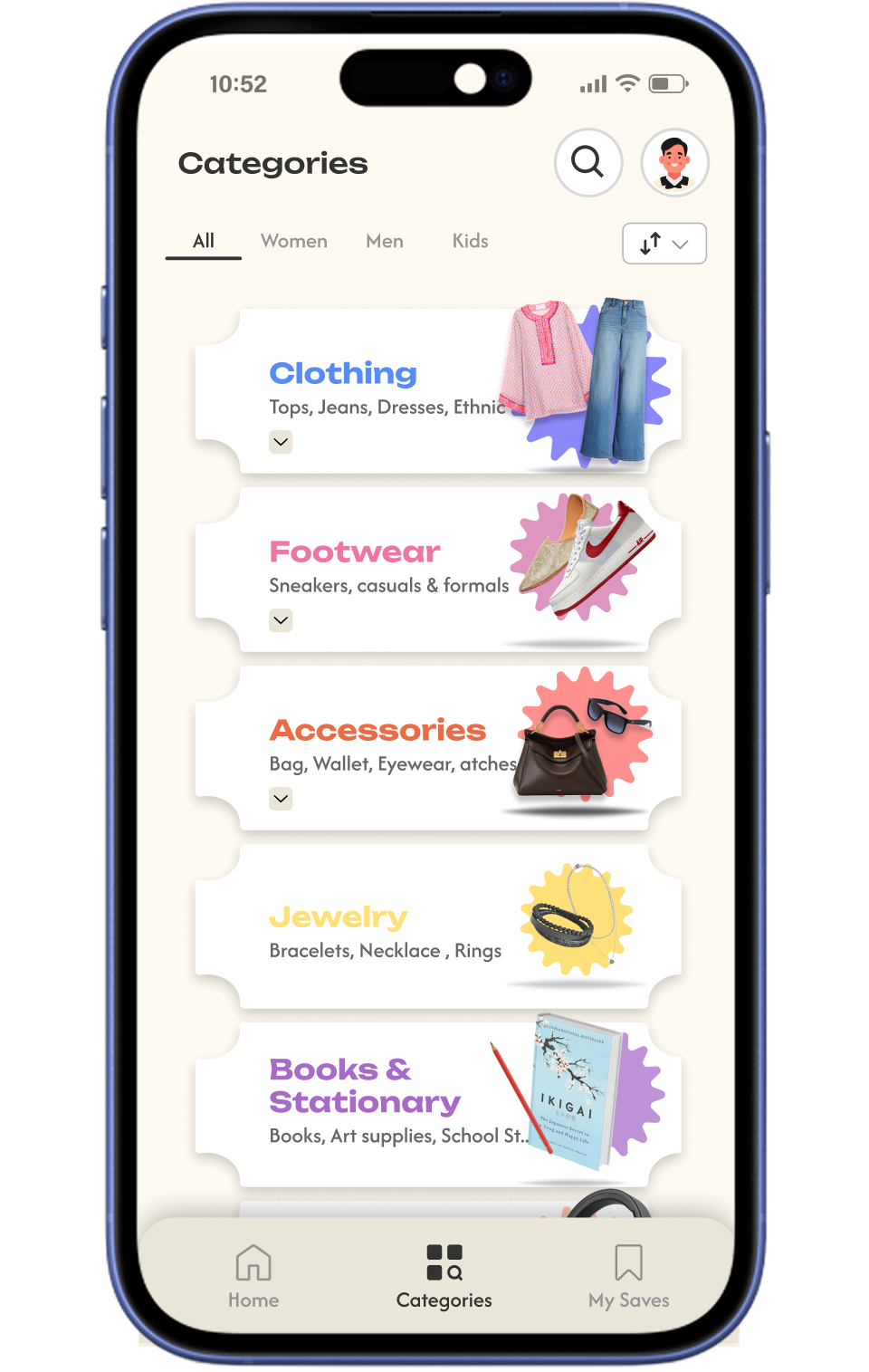
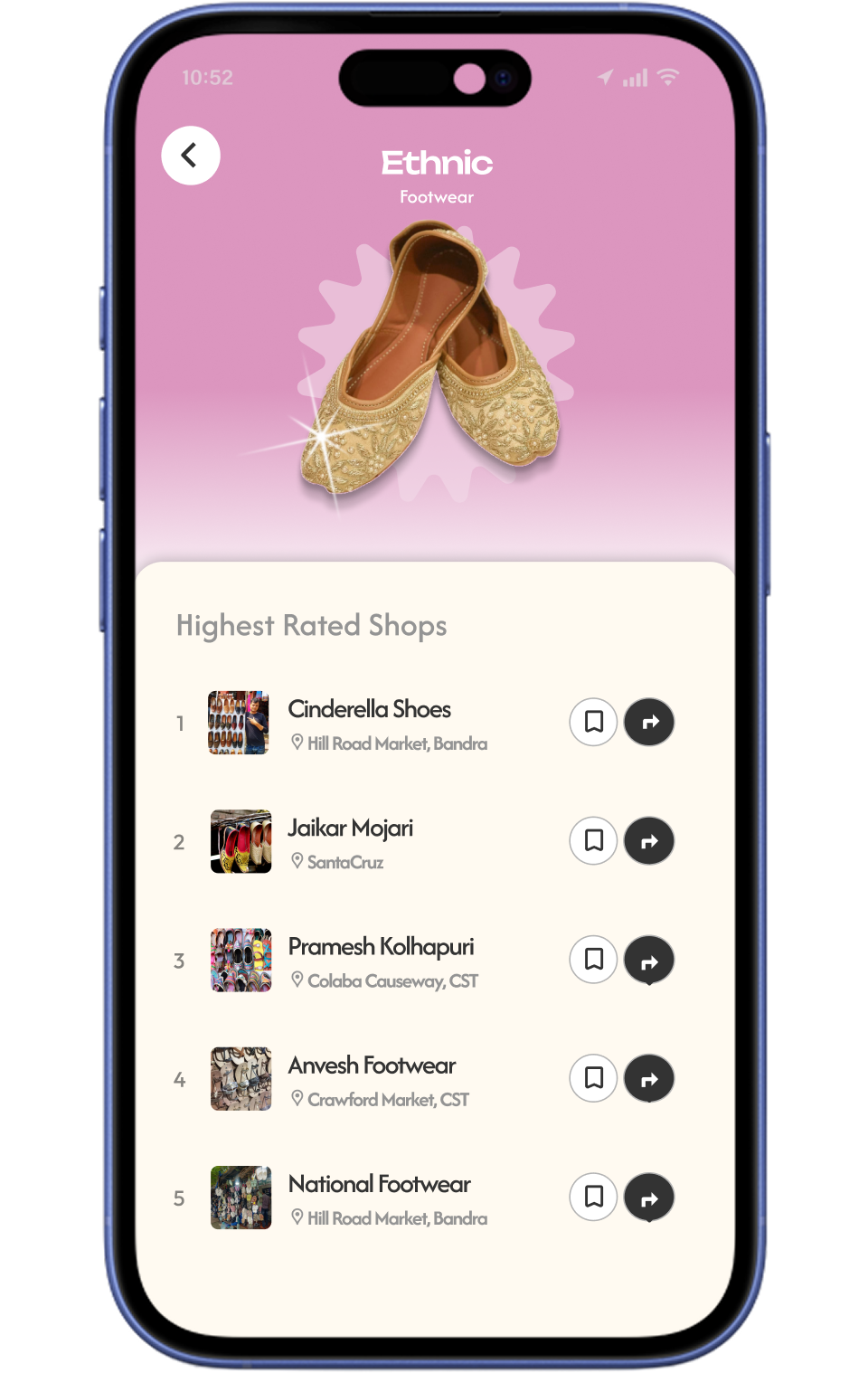
From finding a market to finding a specific shop Shoppin connects the entire journey.
Designing Shoppin
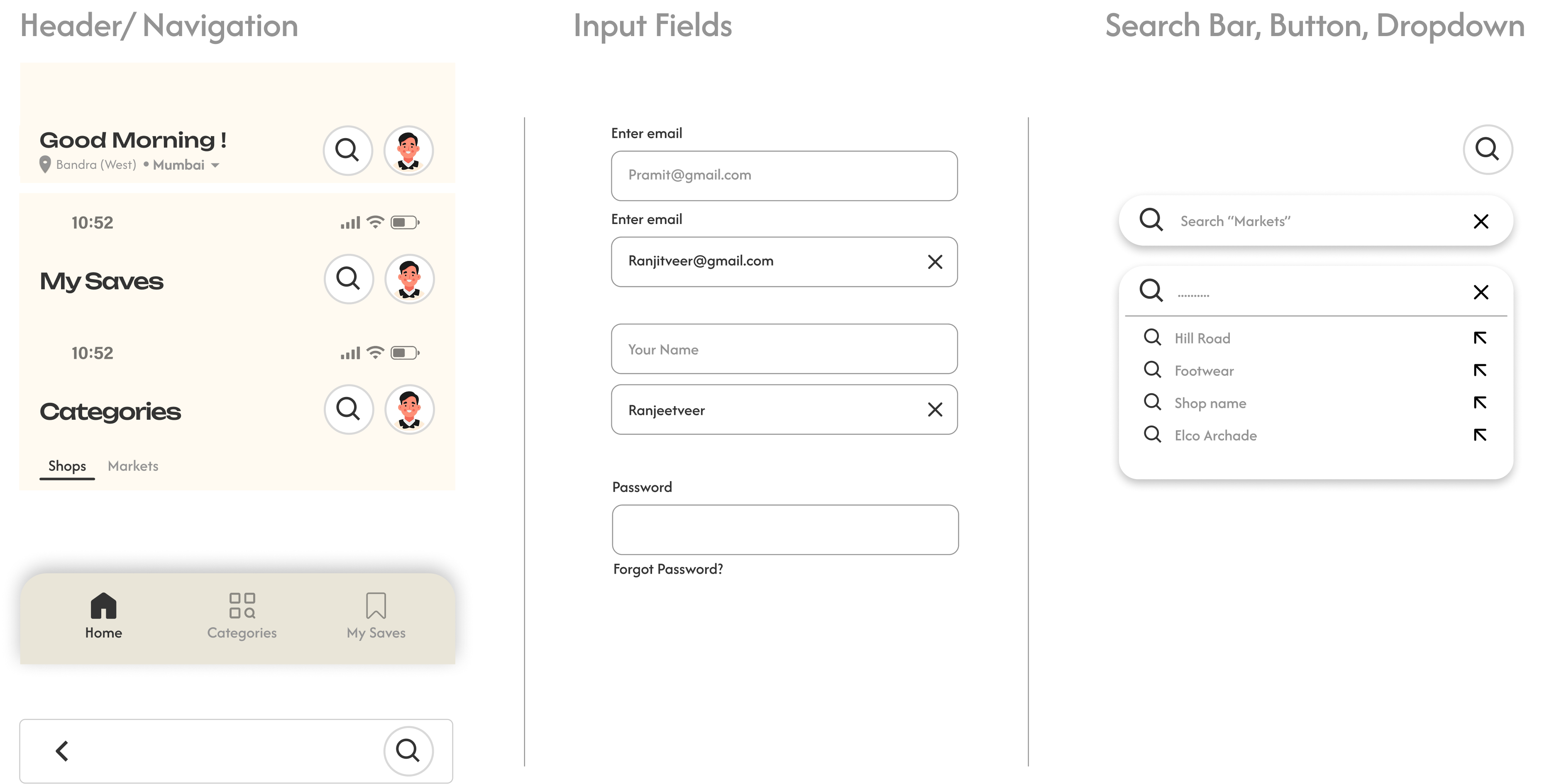
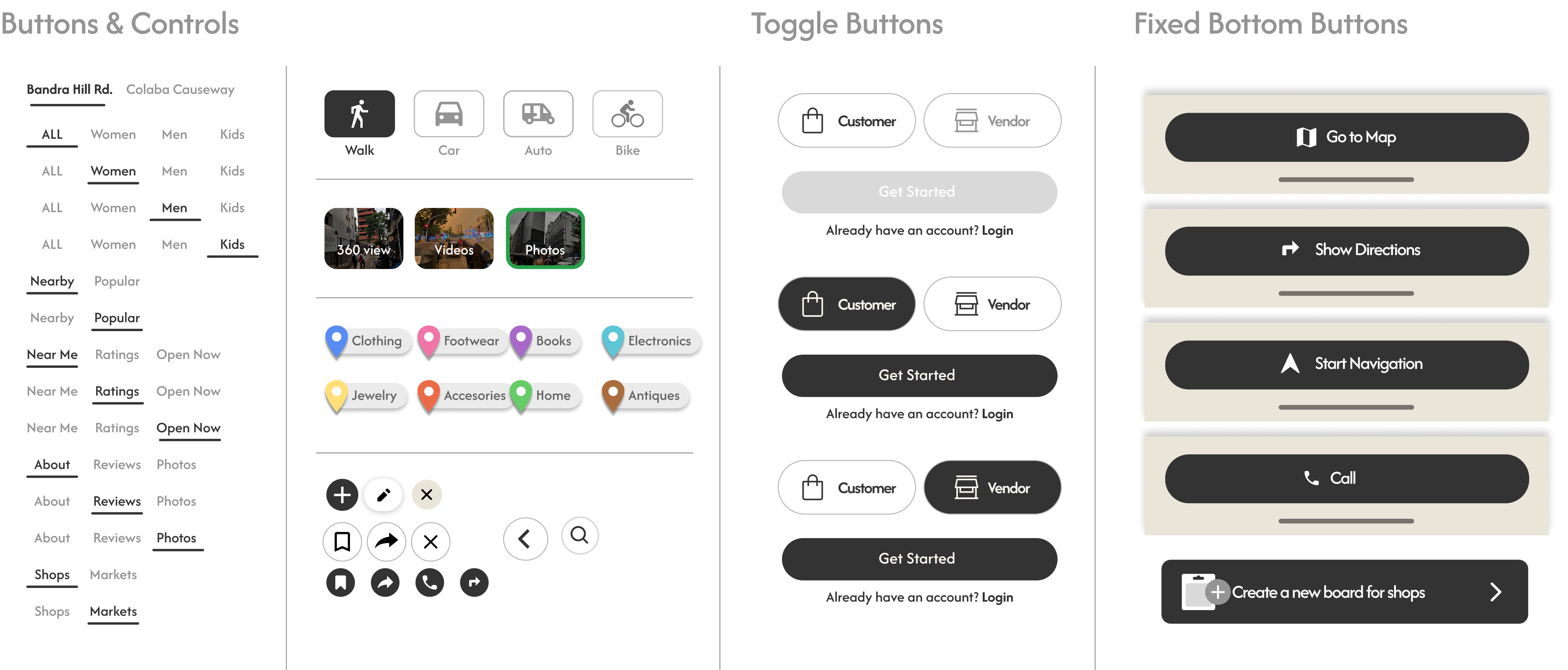
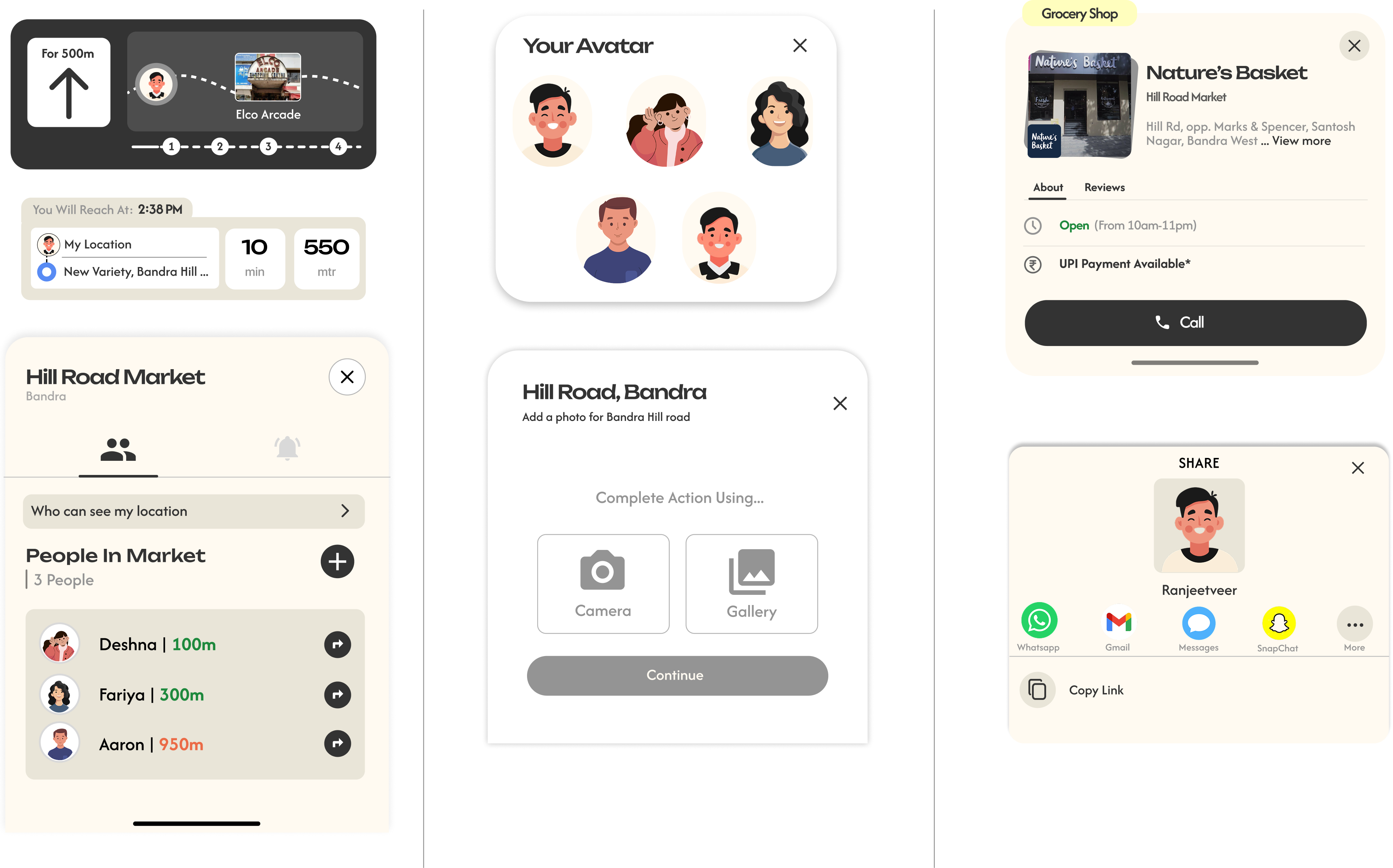
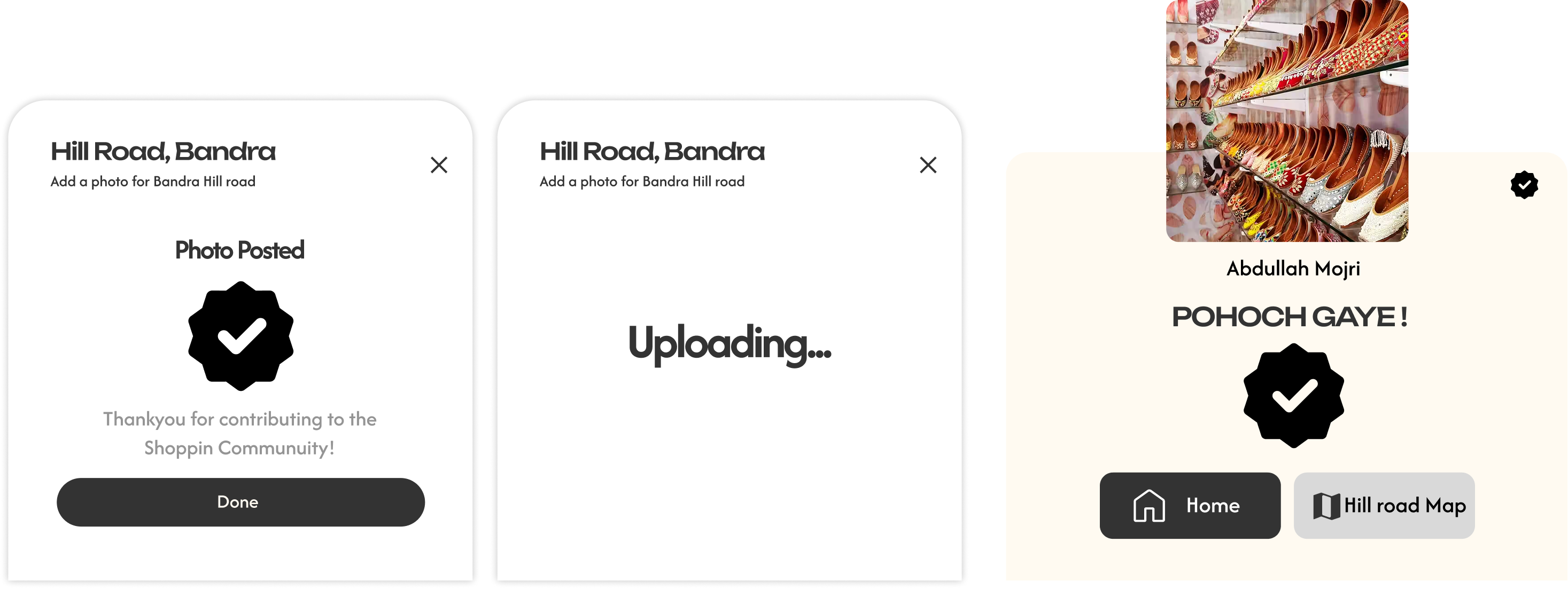
With the product direction established, I worked with Aaron on the UI direction and interaction ideas. I took ownership of the Login, Home and Maps experiences, and prototyped these flows as part of the final product.

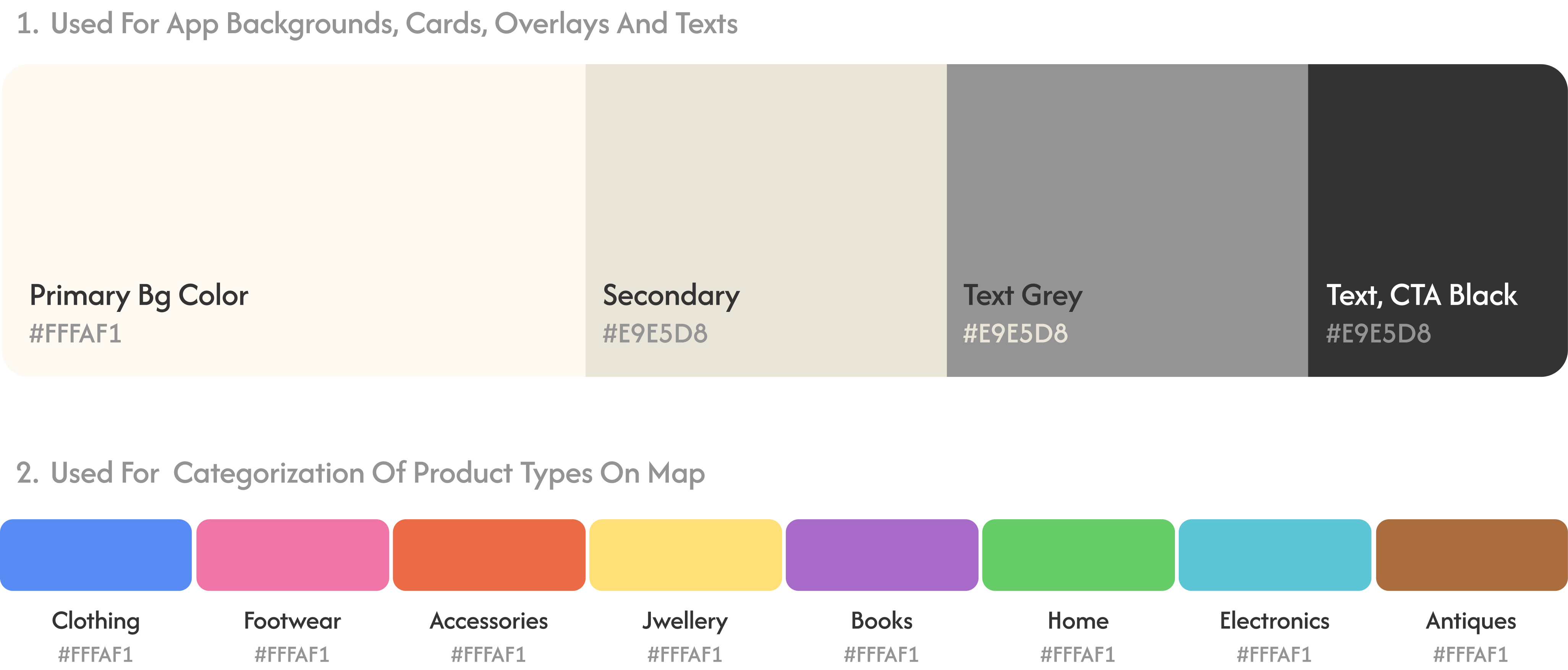
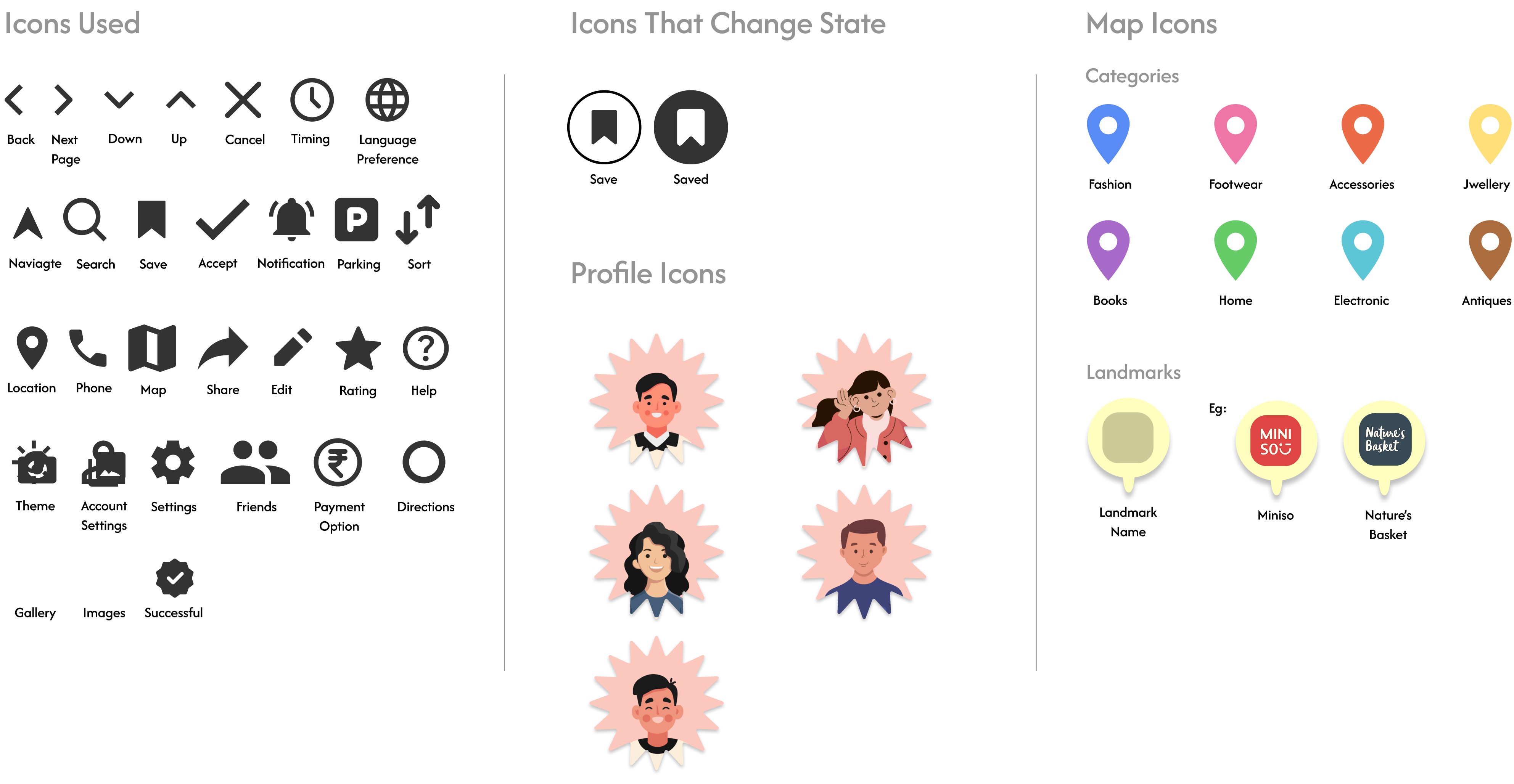
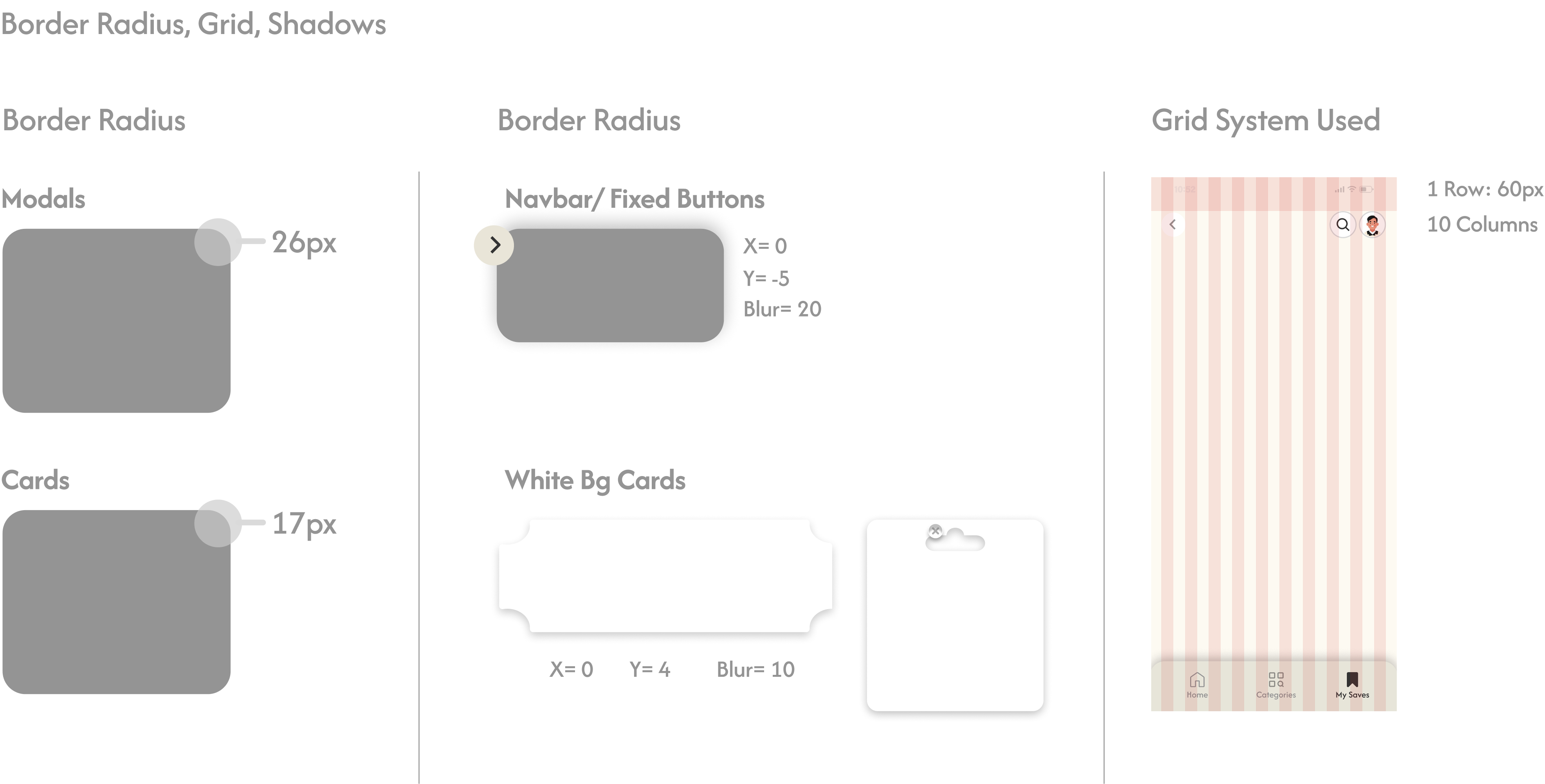
Testing the experience
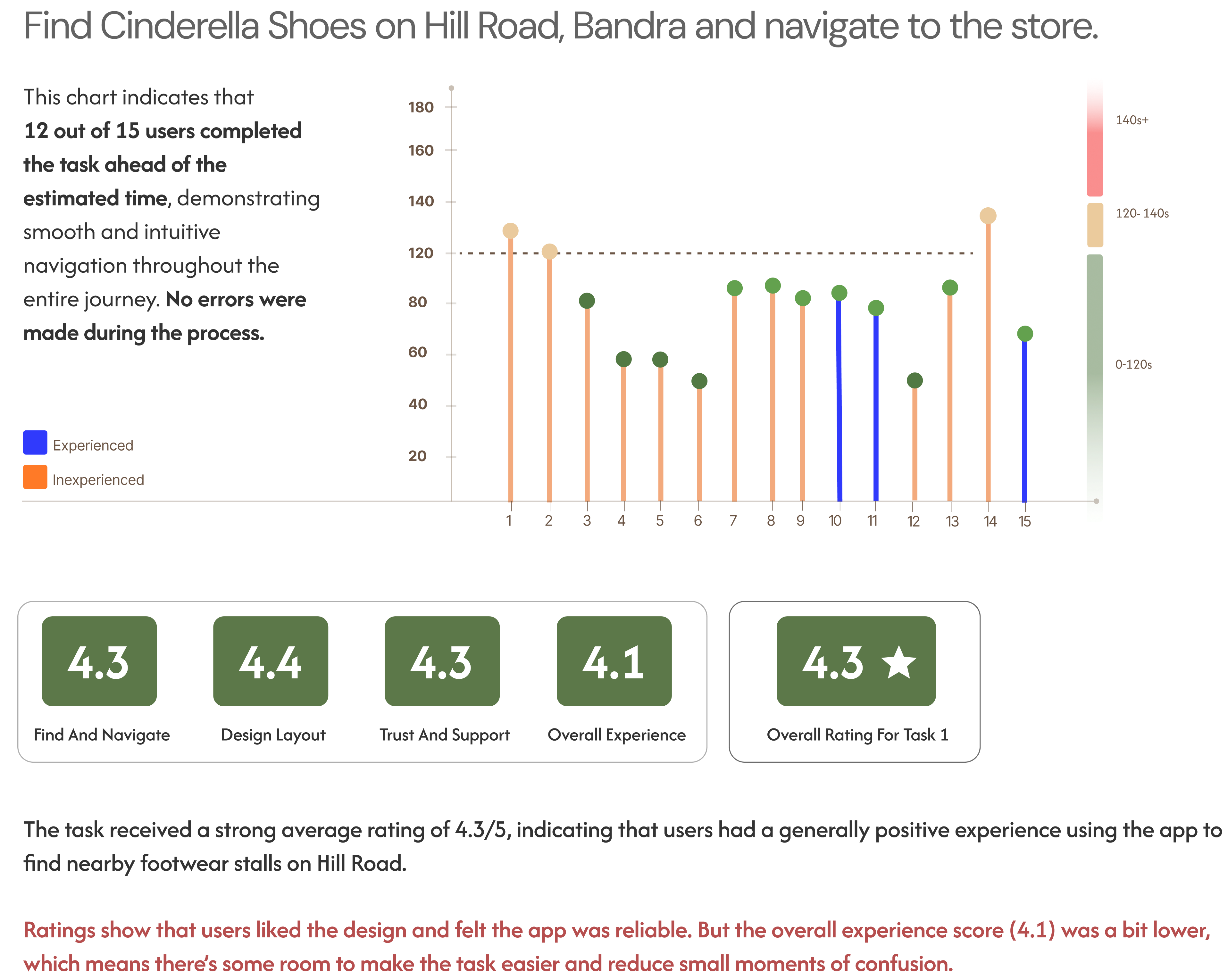
We tested the Shoppin prototype through three tasks focused on the core experience: finding a shop, saving a shop and finding a friend.

Final Experience
Shoppin connects the street-shopping journey from discovering a market to finding a specific shop, navigating through it, saving places and meeting friends along the way.
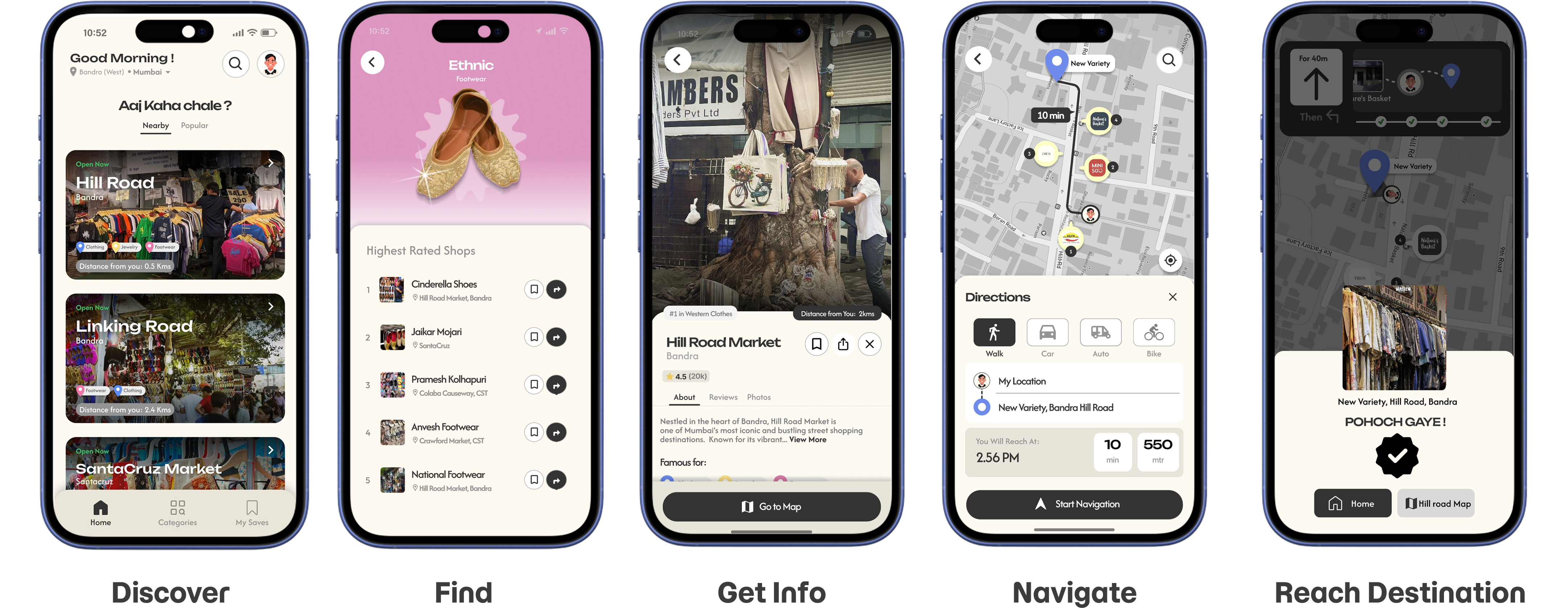
The final experience gives shoppers a digital layer for the parts of street shopping that are difficult to navigate on their own
while keeping discovery, exploration and social interaction at the centre.
Reflection
The biggest thing I took away from Shoppin was that users don't always follow the path we design for them.
Testing showed us that people found their own routes through the product, whether that meant accessing categories from a different screen or saving a shop before creating a board.
It reinforced the value of designing around actual behaviour rather than assumptions.

Designed & Built by,